
Hone
You've submitted a proposal! Congratulations! On to the next one, right?
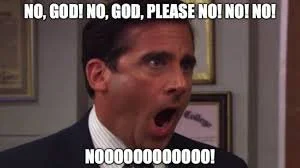
I apologize for this aside into Millennial culture. But hopefully this will remind you to do After Action Reviews (and use the findings!)
Cue Michael Scott from The Office: 'No! God! Please! Noooooooo!!'
(Sorry. I'm a Millennial, or maybe Gen X. I don't really know.)
But seriously: Stop. Take a moment. Learn something.
This is HONE. The fourth and final step of the ARCH model. And it's the step most organizations skip entirely.
At RTI, I fought for After Action Reviews on every major proposal.
Win or lose, we’d gathered the team to ask four questions.
What was supposed to happen? (What was our strategy going in?) What actually happened? (Reality vs. our plan)
Why was there a difference? (Honest analysis of what went right or wrong) What will we do differently? (Actionable changes for next time)
I remember one bid in that we lost. The loss letter was complimentary. Very few negative comments about our technical approach. But the winner had an entirely local team. Including a bunch of organizations that I'd met with during our research phase.
We'd considered more local partnerships, but ended up emphasizing international best practices and technical expertise over local knowledge.
The After Action Review
What was supposed to happen: We'd win based on our technical expertise.
What actually happened: The funder chose a much more local team.
Why the difference: We had expertise but didn't demonstrate local partnership or leadership.
What we changed: For country-specific RFPs, we'd exhaust local partnership possibilities before turning to international expertise. Make local organizations partners from day one.
HONE isn't about massive transformations.
It's about getting a little better after every proposal. Better at understanding funder needs, explaining HOW you execute, and positioning your differentiators.
Those improvements, those iterations and adaptations compound.
One idea that I never got to implement in my health systems work is micro evaluations to drive program adaptation.
I do that now with HONE. Instead of on programs, I do it on proposals.
After Action Reviews aren’t complicated
Just spend two hours with your proposal team. Schedule one hour right after submission and another right after the decision.
Do your best to answer the four questions honestly: What was supposed to happen? What actually happened? Why was there a difference? What will we do differently?
Document what you learn, put it in the proposal folder, share the findings, combine insights from other AARs.
Build your institutional knowledge and stop making the same mistakes.
Final thoughts on this series
Growth isn't a sprint. It's a marathon. High quality processes, whether getting out the door every day for a run or describing “How?” every time, leads to strong outcomes.
ANALYZE. What makes you different.
REVEAL. Aligned funders.
CRAFT. Proposals that show HOW.
HONE. Every proposal.
These are the processes that lead to wins.
Ok, actual final thoughts
Last week, my friend’s dad died of a stroke. If you are a runner, you knew him. Jeff Galloway.
Jeff was a pioneer of process. He knew how to modify a training cycle to help people achieve their goals. As long as you followed through on the plan, he was going to get you across the finish line.
He loved the process. His peers would tell stories of how he never missed a workout and would record each one meticulously in a notebook.
In fact, he loved the process so much that he was training to run the Honolulu Marathon last December at 80 years old before a knee injury sidelined him.
You don’t have to love the process of running, or growth and development, as much as Jeff did to be successful.
But the run/walk method still helped tens of thousands of people accomplish their goals. RIP Jeff.
